Course Overview
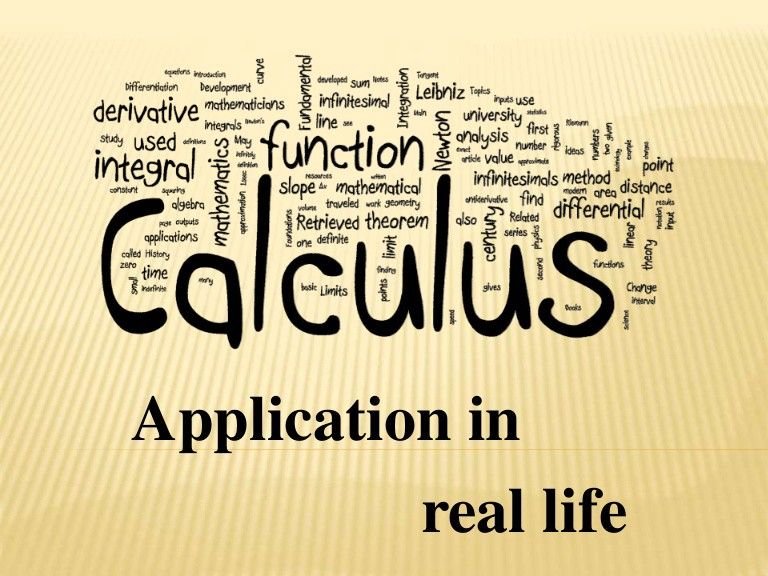
Core Concepts of Calculus
-
Limits
A limit describes the value a function approaches as the input gets closer to a certain point. It forms the base of both differentiation and integration. -
Derivatives (Rate of Change)
A derivative tells how fast something is changing at any instant.
For example:
-
Velocity = rate of change of position
-
Acceleration = rate of change of velocity
-
Integrals (Accumulation)
An integral gives the total accumulation of a quantity.
For example:
-
Total distance from velocity
-
Area under a curve
🔹 Fundamental Theorem of Calculus
This important concept connects differentiation and integration, showing they are inverse processes.
ddx∫axf(t)dt=f(x)\frac{d}{dx}\int_a^x f(t)dt = f(x)dxd∫axf(t)dt=f(x)
🔹 Real-Life Applications
-
In Physics: calculating motion, force, energy
-
In Chemistry: reaction rates and concentration changes
-
In Biology: growth models and population dynamics
-
In Engineering: designing systems and structures
🔹 Simple Example
If you know the speed of a car at every moment, calculus helps you find:
-
How far it traveled (integration)
-
How its speed is changing (differentiation)